Five World Cup matches so far – and five wins for the overwhelming favourites. But all four of the underdogs in today’s matches provided terrific excitement for neutrals and proved that the results of most pool stage matches can not be taken granted.
First up was Romania, who pushed Scotland hard and, before a Paterson penalty and a brace of tries in the last minutes from winger Simon Danielli, threatened to cause a massive upset.
As it is, the Oaks will feel hugely disappointed that they failed to secure a losing bonus point. Coach Andy Robinson has a lot of work to do, but he will be relieved that, thanks to Danielli’s second touch down, they wrapped up a bonus point that, simultaneously, they denied Romania.
Also in Pool B, England edged out top seeds Argentina 13-9 in a dire encounter that saw an incredible eleven missed penalty kicks. Before kick-off, the South Americans were regarded as such a shadow of the side that ensured they were ranked fourth in the world rankings that England were installed as 1/8 favourites.
But the Pumas led for most of the match in the swanky new Otago Stadium before a late score from replacement scrum half Ben Youngs gave England the advantage for the first time in an encounter that was dominated by both sides’ ill-discipline.
Martin Hernandez, Felipe Contepomi and – most surprisingly – Jonny Wilkinson had an appalling time kicking at goal. Argentina’s persistence in attempting to utilise Hernandez’s boot from penalties just inside the English half should be questioned. Indeed, the fourth time this happened (and the fourth time Hernandez sent the ball wide) was enough for those watching to seriously question the merits of electing to kick at goal despite, clearly not having a sufficiently able kicker.
Wilkinson was uncharacteristically off-target, allowing Argentina to retain a 9-3 lead, despite their own problems from the tee, before Youngs crossed to calm the visibly enraged Martin Johnson.
France made hard work of defeating a dynamic Japanese side, who pegged les Bleus back to a 25-21 lead with ten minutes remaining, before three late tries took away from the Brave Blossoms much of the credit that their performance in the first seventy minutes merited.
James Arlidge, Japan’s New Zealand-born outside-half, scored all of his side’s points, including two tries, and the Japanese, under coach John Kirwan, were very disciplined, rucked impressively and have a real livewire in left winger Hirotoki Onozawa. France looked on the rocks for periods in the second half, but had enough class in the end to wrap up the bonus-point win.
Today’s other match saw Fiji run in six tries – four from Vereniki Godeva – in a 49-25 success over Namibia, whose outside-half Theuns Kotze dropped three goals. The Africans scored two tries, including a magnificent one for second row Heinze Koll Fiji were impressive, but Namibia, the lowest ranked side in the tournament, will take pride in their plucky showing.
World rugby, too, will be heartened by today in which all four underdogs impressed, albeit in losing causes.
Saturday, 10 September 2011


Friday, 9 September 2011
Welcome to Estonia's Concrete Jungle
Tallinn, the capital of Estonia, is one of the European Union’s success stories. Popular with tourists for the charming, colourful architecture and cobbled streets of its old town, it is also something of a booming financial centre; earlier this year Estonia became the first former eastern bloc state to adopt the single European currency.
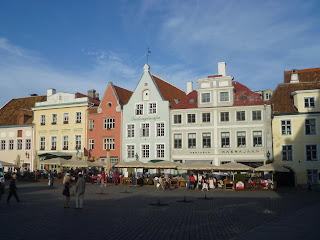
Tallinn’s medieval centre (left) is surrounded by a modern business district, with no shortage of shiny new shopping centres, office blocks and plush hotels. Undeniably, there are nods to Soviet architecture, as wide boulevards adorned with images of the worker run alongside more recent developments.
But for a flavour of communist Estonia, visitors should take the three-hour bus trip across the width of the nation to the city of Narva, perched right on the Russian border.
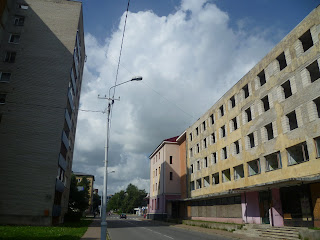
Arrival, on the city’s southern side, hardly gives a flattering first impression of this EU outpost. The symmetrical pattern of the housing blocks that surround the bus terminal (such as it is) are shabby-looking, peeling structures that could be taken straight from a communist builder’s instruction manual.
Even the (slightly) more luxurious houses, as opposed to blocks of flats, are ringed by crumbling pavements and bright, sagging and overgrown weeds.
Walking towards the city centre offers a few more signs of prosperity, but even the grandest hotel is reminiscent of properties in a failed seaside resort. Shops, while undoubtedly well-stocked and so accompanied by the air of prosperity that that brings, are grey and hardly enticing from the exterior.

Staring forlornly at the Russian Federation from the other side of its eponymous river, Narva, particularly when compared to its capital, gives the impression that it would rather it was governed by Moscow.
Closer, both in outlook as well distance, to St Petersburg, than to Tallinn, this impression is confirmed by the nature of its inhabitants, who number around 70,000 – a figure that has been declining since the collapse of the Soviet Union thanks to poor job prospects and the promise of greater prosperity elsewhere.
95 per cent of Narva’s populace speak Russian as their first language; four in five are ethnically Russian, and fewer than half are even Estonian citizens. The city’s Orthodox Cathedral is a relatively busy hub of activity, a stark contrast to the somewhat-forgotten, if newly renovated Lutheran version, the strand of Christianity adhered to by most in the Baltic States. Signs in shop windows, bus timetables and advertisements are in Russian as well as Estonian.

As such, both the physical make-up as well as the attitude of Narva indicate its apparent desire to face east. Adjacent to one of the main junctions in the centre of town – again, a communist-esque roundabout that lies among sweeping, arrow-straight streets, is the residential block (left) that typifies, almost stereotypically, the bland and depressingly mundane Stalinist architecture.
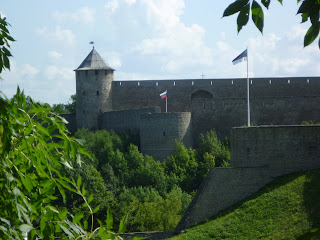
It really does seem like you are taking a step back in time when you walk through this paradise for adherents of concrete. The one significant tourist attraction, unsurprisingly the sole remnant of bustling medieval Narva, is its castle, which engages in a permanent face-off with an equivalent fortress on the Russian side of the river in Ivangorod (above).
This castle, though, is hardly enough to tempt the majority of tourists. Unless you are travelling to or from Russia, Narva might barely be seem worthy of a stopover. Even so, it is a fascinating example of the old Eastern Europe; accessible yet authentic.
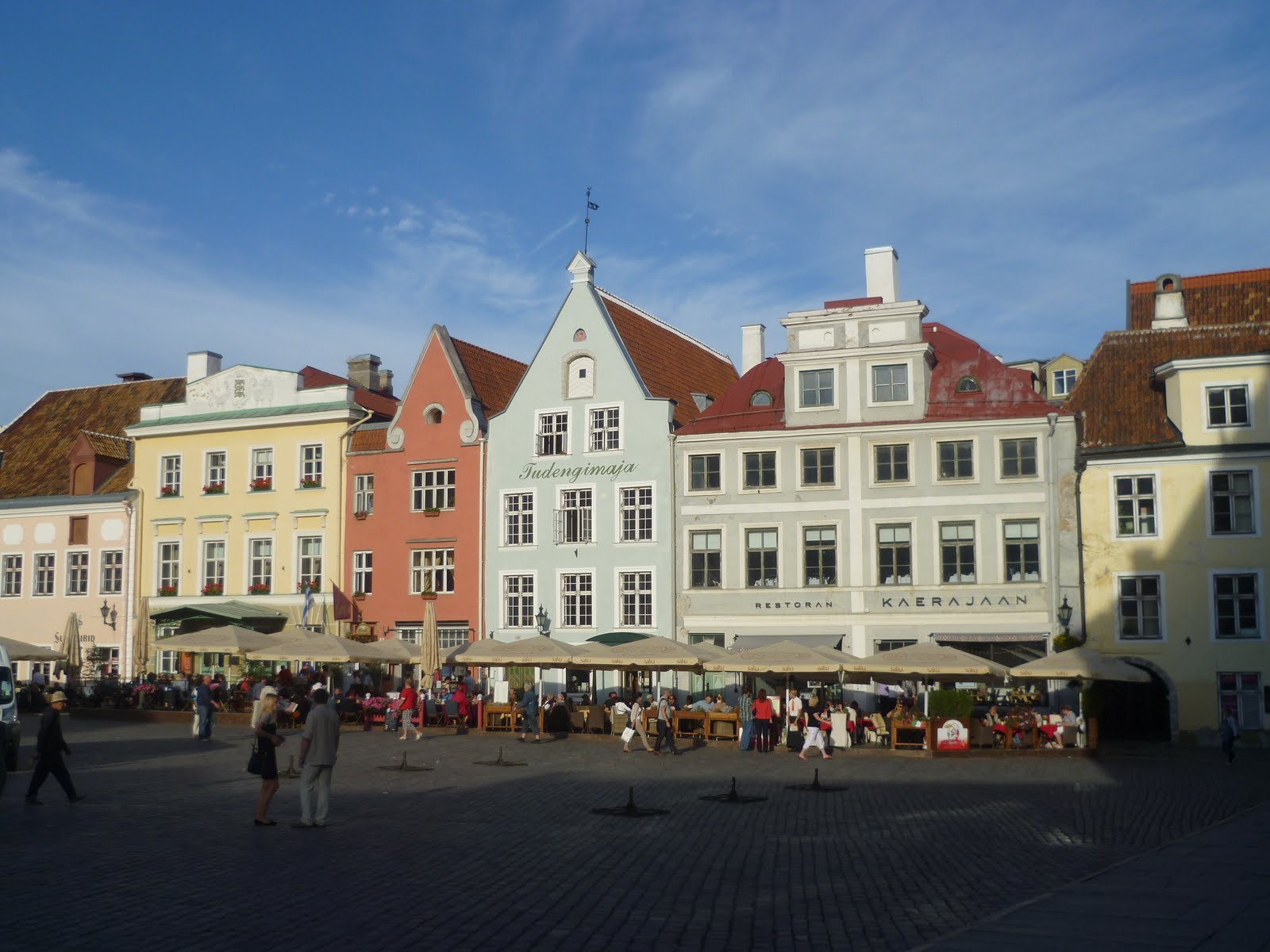
Tallinn’s medieval centre (left) is surrounded by a modern business district, with no shortage of shiny new shopping centres, office blocks and plush hotels. Undeniably, there are nods to Soviet architecture, as wide boulevards adorned with images of the worker run alongside more recent developments.
But for a flavour of communist Estonia, visitors should take the three-hour bus trip across the width of the nation to the city of Narva, perched right on the Russian border.

Arrival, on the city’s southern side, hardly gives a flattering first impression of this EU outpost. The symmetrical pattern of the housing blocks that surround the bus terminal (such as it is) are shabby-looking, peeling structures that could be taken straight from a communist builder’s instruction manual.
Even the (slightly) more luxurious houses, as opposed to blocks of flats, are ringed by crumbling pavements and bright, sagging and overgrown weeds.
Walking towards the city centre offers a few more signs of prosperity, but even the grandest hotel is reminiscent of properties in a failed seaside resort. Shops, while undoubtedly well-stocked and so accompanied by the air of prosperity that that brings, are grey and hardly enticing from the exterior.

Staring forlornly at the Russian Federation from the other side of its eponymous river, Narva, particularly when compared to its capital, gives the impression that it would rather it was governed by Moscow.
Closer, both in outlook as well distance, to St Petersburg, than to Tallinn, this impression is confirmed by the nature of its inhabitants, who number around 70,000 – a figure that has been declining since the collapse of the Soviet Union thanks to poor job prospects and the promise of greater prosperity elsewhere.
95 per cent of Narva’s populace speak Russian as their first language; four in five are ethnically Russian, and fewer than half are even Estonian citizens. The city’s Orthodox Cathedral is a relatively busy hub of activity, a stark contrast to the somewhat-forgotten, if newly renovated Lutheran version, the strand of Christianity adhered to by most in the Baltic States. Signs in shop windows, bus timetables and advertisements are in Russian as well as Estonian.

As such, both the physical make-up as well as the attitude of Narva indicate its apparent desire to face east. Adjacent to one of the main junctions in the centre of town – again, a communist-esque roundabout that lies among sweeping, arrow-straight streets, is the residential block (left) that typifies, almost stereotypically, the bland and depressingly mundane Stalinist architecture.

It really does seem like you are taking a step back in time when you walk through this paradise for adherents of concrete. The one significant tourist attraction, unsurprisingly the sole remnant of bustling medieval Narva, is its castle, which engages in a permanent face-off with an equivalent fortress on the Russian side of the river in Ivangorod (above).
This castle, though, is hardly enough to tempt the majority of tourists. Unless you are travelling to or from Russia, Narva might barely be seem worthy of a stopover. Even so, it is a fascinating example of the old Eastern Europe; accessible yet authentic.
It’s all gone Pete Tonga
New Zealand 41-10 Tonga
At first glance, it may seem as though this match was sadly predictable: hosts (and 66-point favourites according to Ladbrokes) New Zealand ease to a comfortable win over plucky but outclassed Tonga.
After twenty minutes, it threatened to be even worse for both the men in red and, surely, all neutrals. Israel Dagg and Richard Kahui had both strolled for well-worked tries, but ones that were heavily reliant on Tongan naivety (in their defensive set-up and positional awareness) as well as, of course, the more obvious faults of weak tackling.
The All Blacks headed into the interval at Eden Park 29-3 ahead – Tonga kicked a penalty with the last play of the first half after Dagg and Kahui had grabbed a second try apiece – and there was a feeling that an early score in the second period, coupled with what was likely to be the inevitability of the hosts’ physical advantage becoming more and more clear cut, would open the floodgates.
But, finally, Tonga decided that they had had enough of the script.
New Zealand as a whole, and coach Graham Henry in particular, sought a comfortable opening-day victory to calm the nerves of the team and quell the rising pressure of a desperate, expectant public.
But while the All Blacks were certainly not on top form in the second forty minutes, Tonga were much improved from their first-half showing. It took until the hour mark before they next conceded, Kahui collecting his own beautifully weighted chip and flipping the ball inside for flanker Jerome Kaino to gallop over.
But the wonderful Tongan defence that preceded that score was far more impressive. A break from Ma’a Nonu looked for all the world as if it would produce a try, but aggressive, passionate last-ditch tackles flew in, and somehow the All Blacks were repelled. When Sonny Bill Williams was held up in the corner, and the ball recovered by Tonga, you could imagine the cheers emanating from every neutral’s throat.
Even a 34-3 lead – Dan Carter missing what was, for him, a regulation conversion – was unsatisfactory for New Zealand, but Tonga then marched down the field and closed that margin.
Phase after phase of possession for Tonga, which saw them camped inside the All Blacks’ 22 metre line for ten minutes, eventually resulted in a typical forwards try for replacement prop Taumalolo.
New Zealand were penalised twice at five-metre scrums, and although they fended off the prospect of conceding the tournament’s first penalty try, Tonga kept their discipline in the face of an imperious black-shirted defence, eventually breaching it through Sona Taumalolo for a deserved score.
The All Blacks restored some pride, and took some of the gloss off the Tongans’ heroics with a very well-worked late try for Nonu, who combined well with Williams and replacement halfbacks Piri Weepu and Colin Slade in midfield to completely outfox the Tongan defence.
Even so, the match will worry New Zealand, who – although they admittedly did not have their full team out – must improve significantly if they are to get their hands on the William Webb Ellis trophy at this stadium on 23rd October. Australia et al will hardly be quaking in their boots – but, such is the pressure the All Blacks are under that a big win would probably be criticised in itself for being a sign of peaking too early.
From New Zealand’s perspective, don’t read too much into this result except as providing (another) wake-up call for the hosts.
But this encounter was also a demonstration that the minnows are not only here to make up the numbers; they can play a bit as well. Others will hopefully follow the lead of the Tongans, and in slightly more evenly matched fixtures we may even see an upset or two.
At first glance, it may seem as though this match was sadly predictable: hosts (and 66-point favourites according to Ladbrokes) New Zealand ease to a comfortable win over plucky but outclassed Tonga.
After twenty minutes, it threatened to be even worse for both the men in red and, surely, all neutrals. Israel Dagg and Richard Kahui had both strolled for well-worked tries, but ones that were heavily reliant on Tongan naivety (in their defensive set-up and positional awareness) as well as, of course, the more obvious faults of weak tackling.
The All Blacks headed into the interval at Eden Park 29-3 ahead – Tonga kicked a penalty with the last play of the first half after Dagg and Kahui had grabbed a second try apiece – and there was a feeling that an early score in the second period, coupled with what was likely to be the inevitability of the hosts’ physical advantage becoming more and more clear cut, would open the floodgates.
But, finally, Tonga decided that they had had enough of the script.
New Zealand as a whole, and coach Graham Henry in particular, sought a comfortable opening-day victory to calm the nerves of the team and quell the rising pressure of a desperate, expectant public.
But while the All Blacks were certainly not on top form in the second forty minutes, Tonga were much improved from their first-half showing. It took until the hour mark before they next conceded, Kahui collecting his own beautifully weighted chip and flipping the ball inside for flanker Jerome Kaino to gallop over.
But the wonderful Tongan defence that preceded that score was far more impressive. A break from Ma’a Nonu looked for all the world as if it would produce a try, but aggressive, passionate last-ditch tackles flew in, and somehow the All Blacks were repelled. When Sonny Bill Williams was held up in the corner, and the ball recovered by Tonga, you could imagine the cheers emanating from every neutral’s throat.
Even a 34-3 lead – Dan Carter missing what was, for him, a regulation conversion – was unsatisfactory for New Zealand, but Tonga then marched down the field and closed that margin.
Phase after phase of possession for Tonga, which saw them camped inside the All Blacks’ 22 metre line for ten minutes, eventually resulted in a typical forwards try for replacement prop Taumalolo.
New Zealand were penalised twice at five-metre scrums, and although they fended off the prospect of conceding the tournament’s first penalty try, Tonga kept their discipline in the face of an imperious black-shirted defence, eventually breaching it through Sona Taumalolo for a deserved score.
The All Blacks restored some pride, and took some of the gloss off the Tongans’ heroics with a very well-worked late try for Nonu, who combined well with Williams and replacement halfbacks Piri Weepu and Colin Slade in midfield to completely outfox the Tongan defence.
Even so, the match will worry New Zealand, who – although they admittedly did not have their full team out – must improve significantly if they are to get their hands on the William Webb Ellis trophy at this stadium on 23rd October. Australia et al will hardly be quaking in their boots – but, such is the pressure the All Blacks are under that a big win would probably be criticised in itself for being a sign of peaking too early.
From New Zealand’s perspective, don’t read too much into this result except as providing (another) wake-up call for the hosts.
But this encounter was also a demonstration that the minnows are not only here to make up the numbers; they can play a bit as well. Others will hopefully follow the lead of the Tongans, and in slightly more evenly matched fixtures we may even see an upset or two.
Rugby World Cup: Pool D preview
Reigning World Champions they might be, but South Africa don’t enter this tournament in brilliant form. The Springboks finished bottom of the Tri Nations, and whilst they did not always field their strongest team, results such as the 14-9 home defeat to Australia caused much disquiet amongst supporters.

The team is littered with star quality, from prop Tendai ‘the Beast’ Mtawarira to combative fullback Frans Steyn. In JP Pietersen and Bryan Habana, they have probably the fastest wingers in the world, even if they are not quite on the same level as they were two or three years ago. It is hard to see any real weaknesses in the South African team, although perhaps a certain staleness will count against them. They struggled against Tonga in the group stage in 2007, but will easily qualify from this group which features the other two Pacific island nations.

Wales, however, will be quietly confident that they can upset the odds and triumph over the Springboks in both sides’ opening encounter in Wellington. Winning two of their three warm-up games will have done the Welsh a world of good. The Shaun Edwards-led defence was particularly impressive in the second of the two games against England, a 19-9 win in Cardiff in which, incredibly, Wales made 150 tackles and denied England a try despite their opponents making ten visits to Wales’ 22.
Wales pose a particular threat out wide, but they will know better than anyone that attacking flair is not necessarily a recipe for success, as was proved by their thrilling 38-34 defeat to Fiji in the group stage in 2007. The Welsh also have a poor record against Samoa in World Cups, losing in both 1991 and 1999 – and both of those matches took place in Cardiff.

Samoa, however, are weaker than they have been in the past, and are unlikely to pose the same kind of threat that they did to Wales in the 1990s as well as England in the 2003 tournament, when they ran the eventual champions uncomfortably close. They will be particularly reliant on Alesana Tuilagi, but will probably end up losing out to Fiji in the battle to finish third and qualify automatically for the 2015 World Cup.

Fiji will relish taking on Wales again; as well as the 2007 victory, the south-sea island nation upset the odds in the two sides’ last meeting at the Millennium Stadium ten months ago when they snatched a 16-16 draw. That was, admittedly, a much poorer Welsh team than the one they will face Down Under, but it was a demonstration that Pool D is certainly the so-called ‘Group of Death’, and Fiji will fancy their chances of grabbing second place – although you would expect Wales to have learnt their lesson. Fiji will bring the traditional fireworks that stand their sevens team in such good stead, but will find the quarterfinals a step too far this time around.

Namibia are the real whipping boys of Pool D. Their campaign in 2003 was marked by suffering the biggest defeat (in terms of margin of victory) in tournament history against hosts Australia in Perth – by 142 points to nil. They suffered four convincing losses last time around, too, but did put up slightly more of a fight against Ireland. Coach Johan Diergaardt has vowed that this is a much better Namibian side, and in Saracens flanker Jacques Burger they have a player of undoubted star quality. Even so, four heavy defeats surely beckon.
Predictions:
Fiji 49-17 Namibia
South Africa 27-19 Wales
Samoa 55-6 Namibia
South Africa 38-13 Fiji
Wales 29-16 Samoa
South Africa 76-3 Namibia
Wales 36-14 Namibia
South Africa 41-11 Samoa
Wales 32-20 Fiji

The team is littered with star quality, from prop Tendai ‘the Beast’ Mtawarira to combative fullback Frans Steyn. In JP Pietersen and Bryan Habana, they have probably the fastest wingers in the world, even if they are not quite on the same level as they were two or three years ago. It is hard to see any real weaknesses in the South African team, although perhaps a certain staleness will count against them. They struggled against Tonga in the group stage in 2007, but will easily qualify from this group which features the other two Pacific island nations.

Wales, however, will be quietly confident that they can upset the odds and triumph over the Springboks in both sides’ opening encounter in Wellington. Winning two of their three warm-up games will have done the Welsh a world of good. The Shaun Edwards-led defence was particularly impressive in the second of the two games against England, a 19-9 win in Cardiff in which, incredibly, Wales made 150 tackles and denied England a try despite their opponents making ten visits to Wales’ 22.
Wales pose a particular threat out wide, but they will know better than anyone that attacking flair is not necessarily a recipe for success, as was proved by their thrilling 38-34 defeat to Fiji in the group stage in 2007. The Welsh also have a poor record against Samoa in World Cups, losing in both 1991 and 1999 – and both of those matches took place in Cardiff.

Samoa, however, are weaker than they have been in the past, and are unlikely to pose the same kind of threat that they did to Wales in the 1990s as well as England in the 2003 tournament, when they ran the eventual champions uncomfortably close. They will be particularly reliant on Alesana Tuilagi, but will probably end up losing out to Fiji in the battle to finish third and qualify automatically for the 2015 World Cup.

Fiji will relish taking on Wales again; as well as the 2007 victory, the south-sea island nation upset the odds in the two sides’ last meeting at the Millennium Stadium ten months ago when they snatched a 16-16 draw. That was, admittedly, a much poorer Welsh team than the one they will face Down Under, but it was a demonstration that Pool D is certainly the so-called ‘Group of Death’, and Fiji will fancy their chances of grabbing second place – although you would expect Wales to have learnt their lesson. Fiji will bring the traditional fireworks that stand their sevens team in such good stead, but will find the quarterfinals a step too far this time around.

Namibia are the real whipping boys of Pool D. Their campaign in 2003 was marked by suffering the biggest defeat (in terms of margin of victory) in tournament history against hosts Australia in Perth – by 142 points to nil. They suffered four convincing losses last time around, too, but did put up slightly more of a fight against Ireland. Coach Johan Diergaardt has vowed that this is a much better Namibian side, and in Saracens flanker Jacques Burger they have a player of undoubted star quality. Even so, four heavy defeats surely beckon.
Predictions:
Fiji 49-17 Namibia
South Africa 27-19 Wales
Samoa 55-6 Namibia
South Africa 38-13 Fiji
Wales 29-16 Samoa
South Africa 76-3 Namibia
Wales 36-14 Namibia
South Africa 41-11 Samoa
Wales 32-20 Fiji
Thursday, 8 September 2011
Rugby World Cup: Pool C preview
If current form is an accurate guide, Australia should have no trouble in qualifying from this group, most likely as winners. The Wallabies were impressive in the Tri Nations finale, upsetting the odds to defeat New Zealand 25-20 in Brisbane. They are widely seen as most likely to stop the All Blacks triumphing at the World Cup, and I have come to see them as outright favourites.
In Quade Cooper, James O’Connor (whose place in the starting XV is in doubt after a disciplinary issue), Digby Ioane and Kurtley Beale they may stake a claim to having the strongest back line in world rugby, although the highly skilled Cooper is nevertheless weak defensively and has a tendency to get rattled. It is not inconceivable that his attempts to be too clever could backfire and cost his team dear. Scrum half Will Genia, too, is arguably the best in the world in his position at present.

The Australian forwards are themselves hardly an Achilles heel. Captain James Horwill and Radike Samo are imposing presences; that said, the Wallabies will seek to exploit their advantage out wide. Their principal challenge in the group stage will be Ireland, whose team, by contrast, is aging.

This will almost certainly be the final chance for players such as Paul O’Connell, Brian O’Driscoll and Gordon D’Arcy to make an impact on the international stage, although there are plenty of young – yet experienced – backs in the Irish stage, including Jonathan Sexton and Tommy Bowe. Ireland were disappointing in their warm-up matches, losing all four. They performed badly at the last World Cup, too, and will be desperate to make amends, but although it would be a surprise if they failed to qualify from the pool, it is difficult to see them getting further than the quarterfinals.

Italy have a poor record in World Cups, never having qualified for the knockout phases. Flashes of quality in the Six Nations have been all too rare, although a first win over France in the tournament earlier in 2011 gave cause for much celebration amongst supporters of the Azzurri. Number Eight Sergio Parisse is one of the world’s elite players, but along with other stars such as fellow forwards Andrea Lo Cicero and Martin Castrogiovanni, he cannot, of course, carry the rest of the team. Even so, the perennial third seeds will see Ireland as a target, and will pull out all the stops finally to reach the quarterfinals – and on their day, they are certainly capable of doing so.

The United States and Russia met in the Bowl Final of this summer’s Churchill Cup, where they played out a thrilling (if relatively defensively inept) encounter in which the American Eagles triumphed 32-25. There was plenty of attacking rugby – and US winger Takudzwa Ngwenya is still remembered fondly in the rugby world for burning South Africa’s Bryan Habana in the 2007 World Cup to score a famous try. That score had been set up by another key man for the Eagles, wild-haired flanker and captain Todd Clever.

Russia will be keen to make amends for that defeat in this, their first World Cup tournament. Coached by former Welsh captain Kingsley Jones, the Bears will be forced to perform the traditional minnows’ role of retaining respectability against the bigger sides. Being a physical side should help them in this regard, and neither Ireland nor Italy are likely to be able to run riot against them. This tournament, though, will be little more than a learning process for them.
Predictions:
Australia 56-18 Italy
Ireland 32-13 USA
Russia 20-33 USA
Australia 27-16 Ireland
Italy 45-10 Russia
Australia 61-9 USA
Ireland 34-6 Russia
Italy 32-19 USA
Australia 59-3 Russia
Ireland 24-28 Italy
In Quade Cooper, James O’Connor (whose place in the starting XV is in doubt after a disciplinary issue), Digby Ioane and Kurtley Beale they may stake a claim to having the strongest back line in world rugby, although the highly skilled Cooper is nevertheless weak defensively and has a tendency to get rattled. It is not inconceivable that his attempts to be too clever could backfire and cost his team dear. Scrum half Will Genia, too, is arguably the best in the world in his position at present.

The Australian forwards are themselves hardly an Achilles heel. Captain James Horwill and Radike Samo are imposing presences; that said, the Wallabies will seek to exploit their advantage out wide. Their principal challenge in the group stage will be Ireland, whose team, by contrast, is aging.

This will almost certainly be the final chance for players such as Paul O’Connell, Brian O’Driscoll and Gordon D’Arcy to make an impact on the international stage, although there are plenty of young – yet experienced – backs in the Irish stage, including Jonathan Sexton and Tommy Bowe. Ireland were disappointing in their warm-up matches, losing all four. They performed badly at the last World Cup, too, and will be desperate to make amends, but although it would be a surprise if they failed to qualify from the pool, it is difficult to see them getting further than the quarterfinals.

Italy have a poor record in World Cups, never having qualified for the knockout phases. Flashes of quality in the Six Nations have been all too rare, although a first win over France in the tournament earlier in 2011 gave cause for much celebration amongst supporters of the Azzurri. Number Eight Sergio Parisse is one of the world’s elite players, but along with other stars such as fellow forwards Andrea Lo Cicero and Martin Castrogiovanni, he cannot, of course, carry the rest of the team. Even so, the perennial third seeds will see Ireland as a target, and will pull out all the stops finally to reach the quarterfinals – and on their day, they are certainly capable of doing so.

The United States and Russia met in the Bowl Final of this summer’s Churchill Cup, where they played out a thrilling (if relatively defensively inept) encounter in which the American Eagles triumphed 32-25. There was plenty of attacking rugby – and US winger Takudzwa Ngwenya is still remembered fondly in the rugby world for burning South Africa’s Bryan Habana in the 2007 World Cup to score a famous try. That score had been set up by another key man for the Eagles, wild-haired flanker and captain Todd Clever.

Russia will be keen to make amends for that defeat in this, their first World Cup tournament. Coached by former Welsh captain Kingsley Jones, the Bears will be forced to perform the traditional minnows’ role of retaining respectability against the bigger sides. Being a physical side should help them in this regard, and neither Ireland nor Italy are likely to be able to run riot against them. This tournament, though, will be little more than a learning process for them.
Predictions:
Australia 56-18 Italy
Ireland 32-13 USA
Russia 20-33 USA
Australia 27-16 Ireland
Italy 45-10 Russia
Australia 61-9 USA
Ireland 34-6 Russia
Italy 32-19 USA
Australia 59-3 Russia
Ireland 24-28 Italy
Wednesday, 7 September 2011
Rugby World Cup: Pool B preview
In many ways Pool B is the most intriguing of the group stage. England and Scotland will count themselves fortunate to have drawn Argentina, top Pool B seeds thanks to their ranking as the world’s fourth best team when the World Cup draw was made two years ago.
The intervening period has seen the Pumas slip below both the principal opposition nations in this group to ninth (with England fifth and Scotland seventh). The rankings reflect the fact that Argentina, who will join the Tri Nations next season, are a shadow of their 2007 team, which defeated hosts France twice to claim an impressive third-place finish.

Even so, the South Americans will be hopeful of progressing to the quarterfinals, most likely at the expense of Scotland – but a victory over England instead or as well is far from inconceivable. The recent warm-up matches showcased two very different England teams; against Wales (in Cardiff, and the second half at Twickenham), they looked poor. Nevertheless, flashes of excellence in the London encounter with the Welsh, as well as a satisfying avenging of their Six Nations loss in Dublin, indicated that an English side that can click will remain a distinct threat.

Manu Tuilagi, who bagged two tries in those warm-ups, is an exciting option that could solve Martin Johnson’s headache in the centre, although opponents will seek to exploit his distinct lack of international experience. Johnson will have been pleased with Jonny Wilkinson performances in those fixtures, but with the perennial threats of Chris Ashton and Ben Foden, he will be less reliant on Wilkinson’s left boot than when he lifted the Webb Ellis trophy himself in 2003.

Scotland have undergone a mini-resurgence themselves in recent years, although they are far from being a team that will automatically strike fear into the hearts of other top tier sides. Their warm-up matches consisted of a narrow win over Ireland in a dire contest watched by a more than half-empty Murrayfield. Considered as the second-worst team in the Six Nations for much of the previous decade, Scotland impressed in 2010, when they felt that they could have secured the Triple Crown. They followed this with a victory over World Champions South Africa at Murrayfield, but apparently let slip any gain in their disappointing Six Nations campaign earlier this year. Their forwards, particularly Kelly Brown, John Barclay and captain Alastair Kellock, remain formidable, but for too long their backs – with the exception of the pace of Max Evans – have remained relatively impotent.

The other two sides in the Pool, Romania and Georgia are, or course, very much weaker. Romania were a force in the early 1990s, a time which even featured a win in France against the national team. They have qualified for every World Cup, and will be looking to continue their record of winning one match at each tournament since 1995; however, they might find it tough against the Georgians, and the Oaks are certainly not helped by the withdrawal of winger Catalin Fercu, who refused to travel to New Zealand on account of his fear of flying.

Georgian rugby has been rising steadily in recent years. World Cup debutants in 2007, they came extremely close to providing what might have been the biggest shock in international rugby history when they were pipped 14-10 by Ireland; the so-called minnows failed to capitalise on late pressure in the encounter (and had a ‘try’ disallowed by the television match official), which they were leading after 55 minutes. England, Scotland and Argentina will be aware of Georgia’s potential, and should see them off, but the Lelos are sure to put up a tough, physical battle and will make life difficult for the more established nations, and I would expect Georgia to triumph over Romania.
Predictions:
Scotland 35-10 Romania
Argentina 18-27 England
Scotland 31-14 Georgia
Argentina 33-6 Romania
England 44-18 Georgia
England 67-11 Romania
Argentina 18-20 Scotland
Georgia 27-19 Romania
England 28-17 Scotland
Argentina 22-13 Georgia
The intervening period has seen the Pumas slip below both the principal opposition nations in this group to ninth (with England fifth and Scotland seventh). The rankings reflect the fact that Argentina, who will join the Tri Nations next season, are a shadow of their 2007 team, which defeated hosts France twice to claim an impressive third-place finish.

Even so, the South Americans will be hopeful of progressing to the quarterfinals, most likely at the expense of Scotland – but a victory over England instead or as well is far from inconceivable. The recent warm-up matches showcased two very different England teams; against Wales (in Cardiff, and the second half at Twickenham), they looked poor. Nevertheless, flashes of excellence in the London encounter with the Welsh, as well as a satisfying avenging of their Six Nations loss in Dublin, indicated that an English side that can click will remain a distinct threat.

Manu Tuilagi, who bagged two tries in those warm-ups, is an exciting option that could solve Martin Johnson’s headache in the centre, although opponents will seek to exploit his distinct lack of international experience. Johnson will have been pleased with Jonny Wilkinson performances in those fixtures, but with the perennial threats of Chris Ashton and Ben Foden, he will be less reliant on Wilkinson’s left boot than when he lifted the Webb Ellis trophy himself in 2003.

Scotland have undergone a mini-resurgence themselves in recent years, although they are far from being a team that will automatically strike fear into the hearts of other top tier sides. Their warm-up matches consisted of a narrow win over Ireland in a dire contest watched by a more than half-empty Murrayfield. Considered as the second-worst team in the Six Nations for much of the previous decade, Scotland impressed in 2010, when they felt that they could have secured the Triple Crown. They followed this with a victory over World Champions South Africa at Murrayfield, but apparently let slip any gain in their disappointing Six Nations campaign earlier this year. Their forwards, particularly Kelly Brown, John Barclay and captain Alastair Kellock, remain formidable, but for too long their backs – with the exception of the pace of Max Evans – have remained relatively impotent.

The other two sides in the Pool, Romania and Georgia are, or course, very much weaker. Romania were a force in the early 1990s, a time which even featured a win in France against the national team. They have qualified for every World Cup, and will be looking to continue their record of winning one match at each tournament since 1995; however, they might find it tough against the Georgians, and the Oaks are certainly not helped by the withdrawal of winger Catalin Fercu, who refused to travel to New Zealand on account of his fear of flying.

Georgian rugby has been rising steadily in recent years. World Cup debutants in 2007, they came extremely close to providing what might have been the biggest shock in international rugby history when they were pipped 14-10 by Ireland; the so-called minnows failed to capitalise on late pressure in the encounter (and had a ‘try’ disallowed by the television match official), which they were leading after 55 minutes. England, Scotland and Argentina will be aware of Georgia’s potential, and should see them off, but the Lelos are sure to put up a tough, physical battle and will make life difficult for the more established nations, and I would expect Georgia to triumph over Romania.
Predictions:
Scotland 35-10 Romania
Argentina 18-27 England
Scotland 31-14 Georgia
Argentina 33-6 Romania
England 44-18 Georgia
England 67-11 Romania
Argentina 18-20 Scotland
Georgia 27-19 Romania
England 28-17 Scotland
Argentina 22-13 Georgia
Tuesday, 6 September 2011
Rugby World Cup: Pool A preview
Favourites at nearly every World Cup since they won the inaugural tournament in 1987, also on home soil, New Zealand will be desperate to rid themselves of their ‘chokers’ tag, and there is no better opportunity than now. The All Blacks approached the tournament in a rich vein of form, thrashing South Africa and comfortably seeing off Australia in the opening encounters of this season’s Tri Nations competition. However, a defeat to the Springboks in Port Elizabeth – albeit in a match in which New Zealand fielded a reserve line-up – allowed Australia the chance, which they duly took, to avenge their earlier defeat against the All Blacks.

That defeat to the Wallabies has made the New Zealand public even more nervous than they already were, and, despite the obvious denials, is likely to have a similar effect on the team. Group rivals France are something of a bogey team for the hosts, having knocked them out of the 1999 and 2007 tournaments in two of the most famous matches in World Cup history. This group, more than any other, has two teams of a far higher quality than the other three, Tonga, Japan and Canada.

Both the All Blacks and the French would be extremely upset not to beat each of those teams by at least twenty points, and there is very little scope for an upset. New Zealand should defeat France at Auckland’s Eden Park, although France will be hopeful that they can take advantage of the pressure that the hosts are under. To do so they must close down the All Blacks’ backs, primarily Zac Guildford, Cory Jane and . New Zealand will also seek to dominate up front, but the French forwards are no pushovers themselves, and Marc Lievremont’s men must retain their discipline in order to cause an upset. That, though, is by no means out of the question; with both teams having a reputation for free-flowing rugby, the fixture, on 24 September, is likely to be one of the highlights of the group stage.

Japan were disappointed not to be chosen as hosts of this tournament – although they have since been awarded the 2019 event – and they will want to make a strong showing in order to build-up their support over the course of the next eight years. They will be acutely aware that sixteen years ago, the last time they shared a group with New Zealand they conceded the most points in a World Cup match ever, losing to the All Blacks by 145 points to seventeen. They will avoid a similar scoreline this year, but they will focus their attention on attempting to defeat Canada and Tonga. The Cherry Blossoms, under coach John Kirwan, will be filled with confidence after having won the Pacific Nations Cup earlier this year, beating Tonga and Fiji.

Canada, fresh from their own second place finish at this year’s Churchill Cup, in which they beat Italy A (who went on to defeat Tonga in the Plate final) and Russia, were also in Japan’s group in 2007. That meeting resulted in a 12-12 draw, in a thrilling contest that was nevertheless short of high-class rugby. The three fixtures between the lesser teams in Pool A will be worthy contests, and each team will approach them with the hope, or even expectation, of winning.

Predictions:
New Zealand 71-8 Tonga
France 62-13 Japan
Tonga 25-22 Canada
New Zealand 78-10 Japan
France 48-9 Canada
Tonga 24-16 Japan
New Zealand 29-19 France
Canada 23-29 Japan
France 55-6 Tonga
New Zealand 61-16 Canada

That defeat to the Wallabies has made the New Zealand public even more nervous than they already were, and, despite the obvious denials, is likely to have a similar effect on the team. Group rivals France are something of a bogey team for the hosts, having knocked them out of the 1999 and 2007 tournaments in two of the most famous matches in World Cup history. This group, more than any other, has two teams of a far higher quality than the other three, Tonga, Japan and Canada.

Both the All Blacks and the French would be extremely upset not to beat each of those teams by at least twenty points, and there is very little scope for an upset. New Zealand should defeat France at Auckland’s Eden Park, although France will be hopeful that they can take advantage of the pressure that the hosts are under. To do so they must close down the All Blacks’ backs, primarily Zac Guildford, Cory Jane and . New Zealand will also seek to dominate up front, but the French forwards are no pushovers themselves, and Marc Lievremont’s men must retain their discipline in order to cause an upset. That, though, is by no means out of the question; with both teams having a reputation for free-flowing rugby, the fixture, on 24 September, is likely to be one of the highlights of the group stage.

Japan were disappointed not to be chosen as hosts of this tournament – although they have since been awarded the 2019 event – and they will want to make a strong showing in order to build-up their support over the course of the next eight years. They will be acutely aware that sixteen years ago, the last time they shared a group with New Zealand they conceded the most points in a World Cup match ever, losing to the All Blacks by 145 points to seventeen. They will avoid a similar scoreline this year, but they will focus their attention on attempting to defeat Canada and Tonga. The Cherry Blossoms, under coach John Kirwan, will be filled with confidence after having won the Pacific Nations Cup earlier this year, beating Tonga and Fiji.

Canada, fresh from their own second place finish at this year’s Churchill Cup, in which they beat Italy A (who went on to defeat Tonga in the Plate final) and Russia, were also in Japan’s group in 2007. That meeting resulted in a 12-12 draw, in a thrilling contest that was nevertheless short of high-class rugby. The three fixtures between the lesser teams in Pool A will be worthy contests, and each team will approach them with the hope, or even expectation, of winning.

Predictions:
New Zealand 71-8 Tonga
France 62-13 Japan
Tonga 25-22 Canada
New Zealand 78-10 Japan
France 48-9 Canada
Tonga 24-16 Japan
New Zealand 29-19 France
Canada 23-29 Japan
France 55-6 Tonga
New Zealand 61-16 Canada
Subscribe to:
Posts (Atom)